Rudy Carezzevoli/Getty Images
Agonizing F1 pre-season leaves huge question marks about Aston Martin's prospects
It seems inconceivable that the situation could be so bleak for a team many tipped to break through as a race-winning and perhaps even title-challenging force heading into the major rule changes in 2026. Yet Aston Martin heads into the Australian Grand Prix weekend facing the possibility that outpacing newcomer Cadillac is the limit of its ambitions. Even finishing the race seems improbable. Given the vast sums of money invested, the aggressive recruitment, the state-of-the-art factory packed with cutting-edge technology, the arrival of design legend Adrian Newey and works Honda engines, can it really be that bad?
Testing indicates that it absolutely is. The Aston Martin only turned a wheel for the first time on the penultimate afternoon of the first test in Barcelona. It went on to complete just over 2100km of running, more than 1800km behind next-worst Cadillac, and lapped 3.982s off the pace across its eight days of running. Testing data is of limited value, but every single metric shows Aston Martin is in terrible shape.
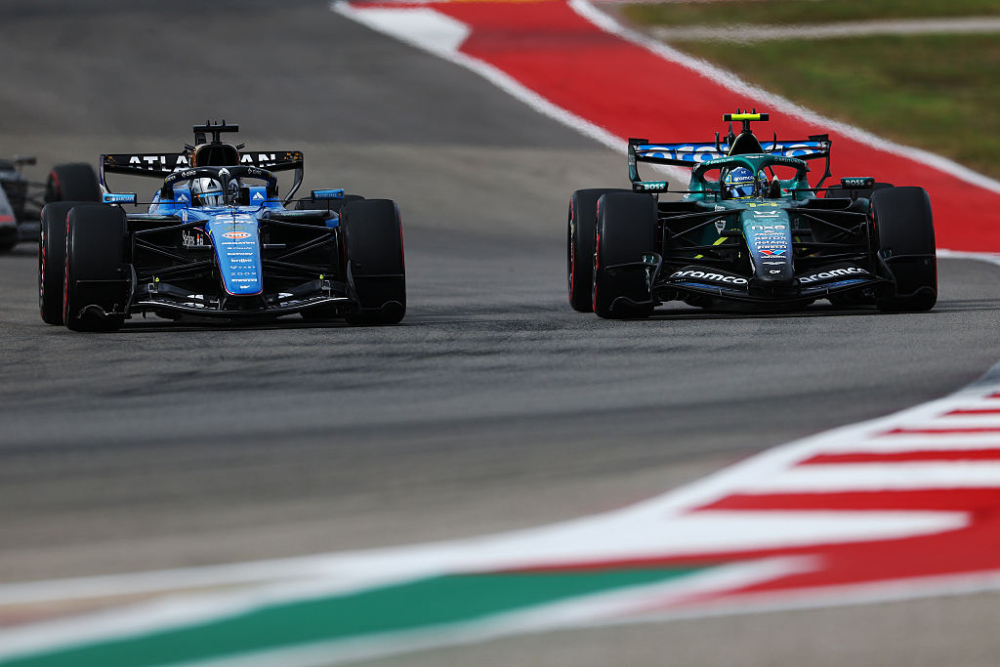
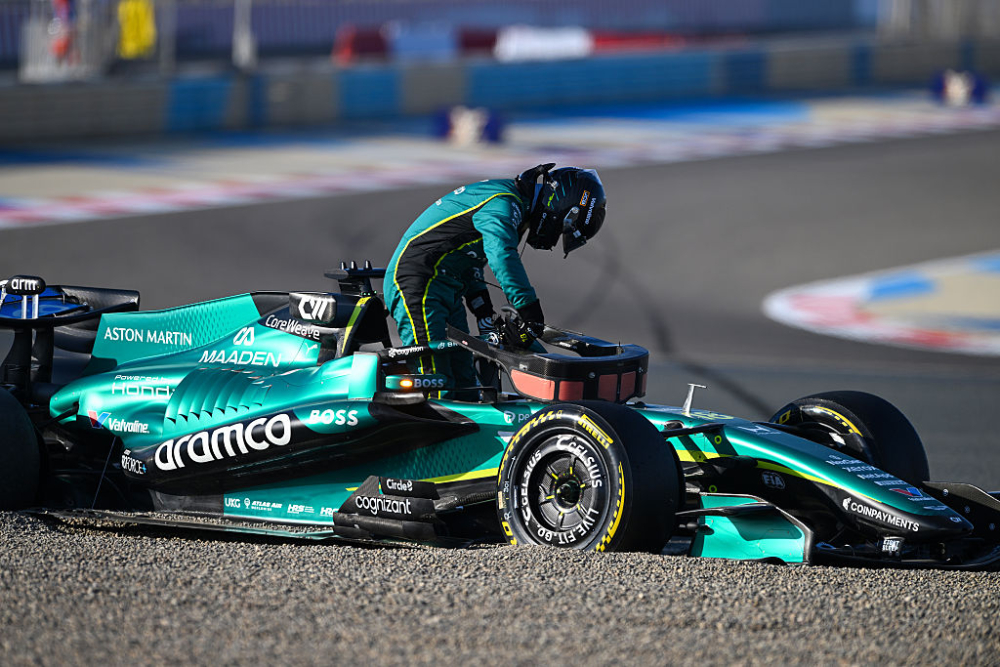
The car also looked awful on track in Bahrain, locking up regularly and suffering from obvious balance problems. Even if you closed your eyes, the problems were obvious as the rough and rattling Honda power unit stood apart from the rest. And all of that was only noticeable when the car was running, which was infrequent given the problems and resulting parts shortage. On the final day, a mere six slow laps were completed even after emergency dyno work at Honda’s F1 facility in Sakura, Japan, was completed overnight in an attempt to find a viable run program to allow at least some work to be completed.
The fundamental issue is not about cooling, as some have posited. Instead, Honda has confirmed that abnormal vibrations are causing damage to the battery system. Work is ongoing in Japan and at Aston Martin’s Silverstone headquarters to mitigate this as far as possible for the Australian Grand Prix, but at best that means countermeasures to contain the problem at the cost of performance. The homologation deadline for the power units is March 1, so designs can’t now be changed even if Honda wanted to. That said, there is scope for fixes to be made for reliability reasons with FIA approval, and Honda has already confirmed that will happen – albeit not for Australia. Again, significant lead time is required to understand the problem fully, complete any required redesign work and manufacture the parts. What’s more, Honda admits it has not yet got to the bottom of its troubles.
Over and above that, there’s also the possibility of making performance design changes to the V6 engine itself under the regulations offering ‘additional development and upgrade opportunities’. The first evaluation period for this is based on performance across the first six races, meaning Honda could be granted additional dyno time and even extra spending under the cost cap to facilitate such upgrades should it perform badly enough. Again, it would take time for this to have an impact.
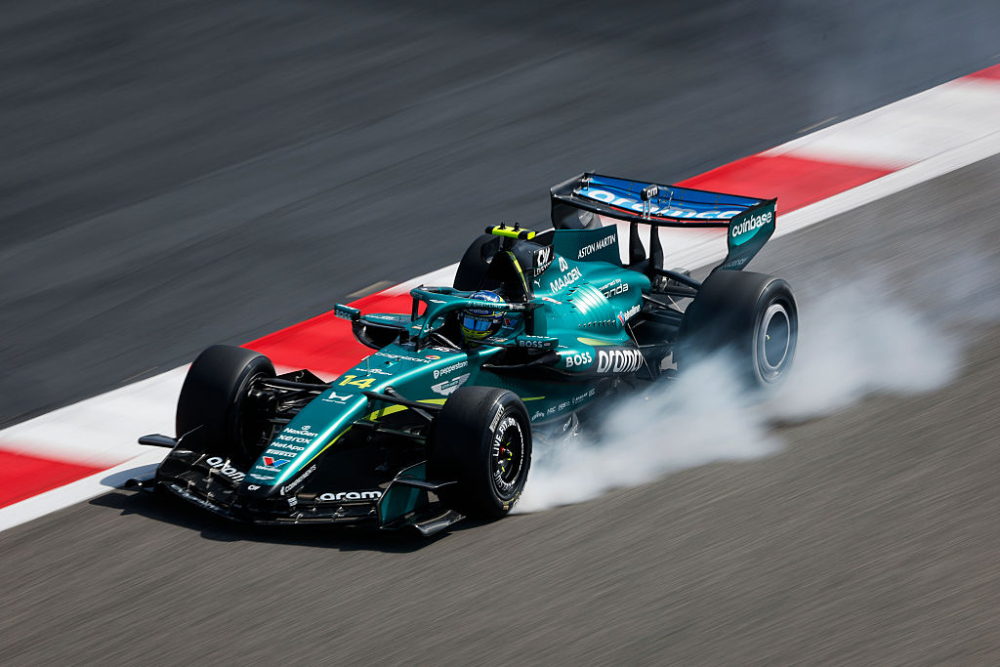
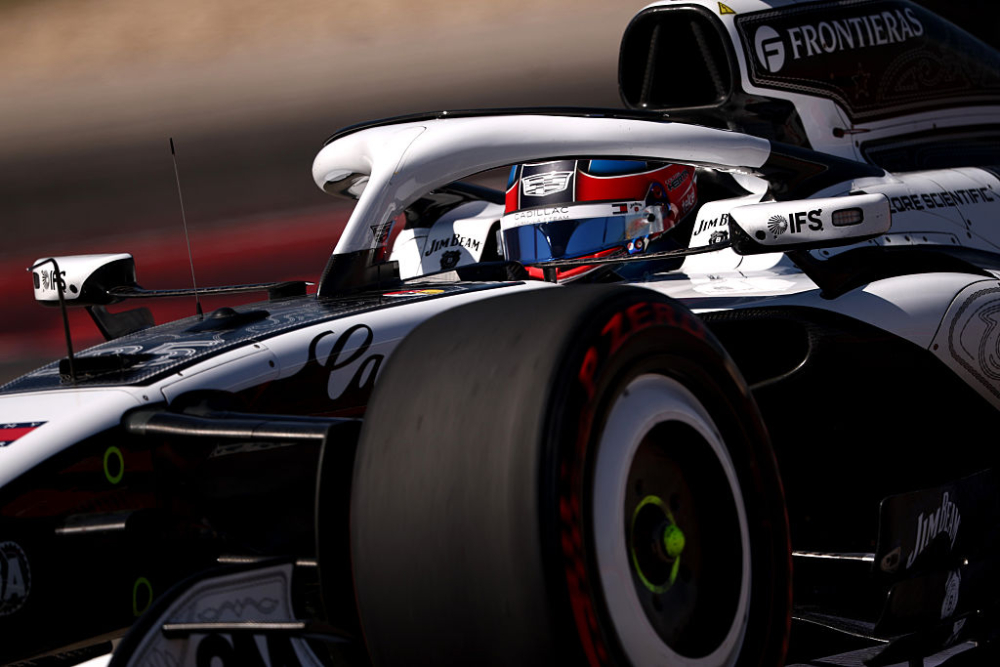
Aston Martin's AMR26 has looked a handful on track. Sam Bloxham/Getty Images
Honda recognized that there were problems with vibrations based on dyno testing, but the extent of them proved to be far more brutal in the real world. The effect has now been replicated at Sakura, but diagnosing the root cause is not the work of a moment given it can be the consequence of a complex interaction of factors. The chassis can also play a part in this, and it's known that Aston Martin has had some difficulties with its first in-house F1 gearbox since 2008, which means that while the first-order problem is the Honda power unit it’s unclear whether it is solely of Sakura’s making. That’s especially true given the revelation that Aston Martin pushed for a reduction in the overall length of the Honda product for packaging reasons that didn’t impact the V6 itself, but has had an effect on other parts including the battery and control electronics.
While there are echoes of Honda’s early days with McLaren and the packaging pushes that led to the infamous size-zero packaging, the stop-start nature of its F1 program has unquestionably put it on the back foot. Honda officially withdrew from F1 at the end of 2021, continuing to supply Red Bull on a commercial basis. As a result, its F1 design and development program was shut down and staff reassigned, save for a skeleton team that supported the Red Bull deal. This had to be reassembled when Honda decided to partner with Aston Martin, meaning that it couldn’t work on early versions of the power unit in 2022 before the cost cap kicked in, and wasn’t fully up and running at the start of ‘23 when it did.
That’s not the only area where Aston Martin was behind. It was also slow to start its 2026 car, as revealed in an interview with Adrian Newey, who took over as team principal this year along with his ongoing role as managing technical partner, released by the team itself.
"The AMR Technology Campus is still evolving, the windtunnel wasn't on song until April, and I only joined the team last March, so we've started from behind, in truth. It's been a very compressed timescale and an extremely busy 10 months," said Newey. "We didn’t get a model of the '26 car into the windtunnel until mid-April, whereas most, if not all, of our rivals would have had a model in the windtunnel from the moment the 2026 aero testing ban ended at the beginning of January last year. That put us on the back foot by about four months, which has meant a very, very compressed research and design cycle. The car only came together at the last minute, which is why we were fighting to make it to the Barcelona shakedown."
Add to that the resulting reorganizations, including Andy Cowell moving from his CEO role to chief strategy officer while he sees out his time with the team, and it’s clear that Newey’s arrival was always too late to be fully felt in 2026. In that regard, the major regulations overhaul probably came a little too early for the team. However, that’s not sufficient justification for the very deep hole it finds itself in.
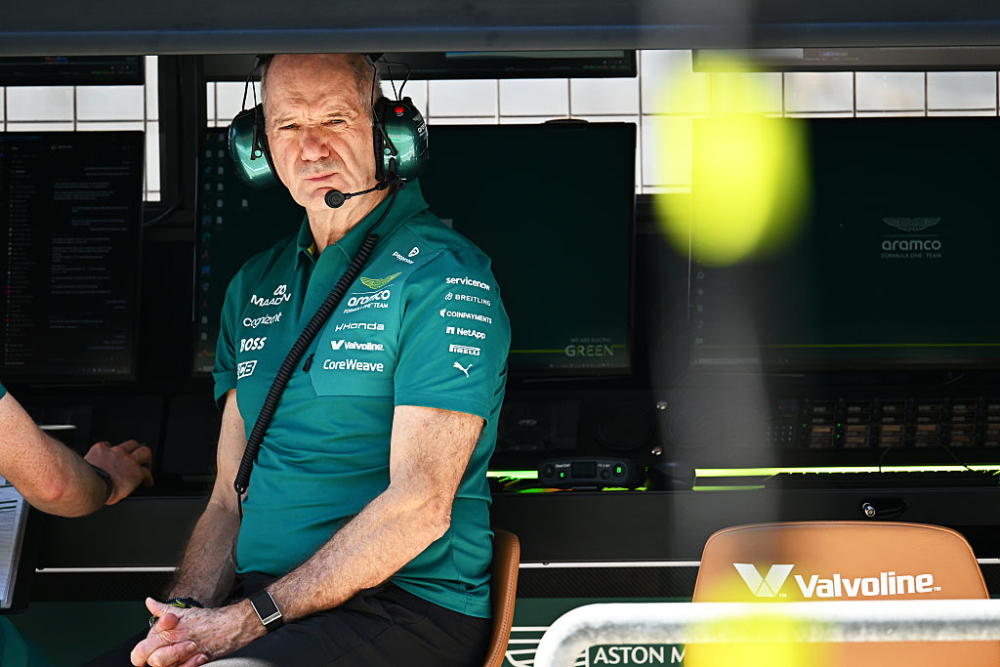
Adrian Newey's later arrival hasn't been fully felt yet. Guido De Bortoli/Getty Images
Right now, it’s difficult to draw definitive conclusions about how much responsibility lies with Honda and how much with Aston Martin. The overall performance of the Honda power unit if it didn’t have the battery difficulties remains an open question, and the lack of running and problems means the potential of the chassis is still unexplored. How many of the very visible dynamic problems are intrinsic to the car, how many to the power unit, and to what extent is it all merely a consequence of being earlier in traversing a very steep learning curve with these new cars? It would be naive to imagine that the battery could be fixed and suddenly all of that four-second deficit would vanish, but it’s impossible to know what virtues and vices lie in the unexplored aspects of the Aston Martin-Honda package.
So what happens now? That’s the big question and it’s fair to say that Aston Martin did not look like a happy and united team during testing. That word ‘united’ is the key one. It doesn’t really matter where Aston Martin is now because all any team can do is get its head down, work through the problems and keep improving. Times like this test any team’s culture and cracks are brutally exposed. It would be easy for owner Lawrence Stroll to pile the pressure on, threaten jobs, make changes, when actually the only choice is to let this play out. Aston Martin’s timeline for success has been extended dramatically and ‘26 is now a recovery season. And while it triages its problems, those at the front in good shape will be able to progress and develop, making the catch-up job even more difficult. There’s no way to shortcut that process and it would be pointless even to hazard a guess at what the new timeline should be.
The ingredients are still there for success. Just because Honda is struggling doesn’t mean it will do so indefinitely, as its transformation from struggler with McLaren to champion with Red Bull proves. Just because many will reach for the narrative of Newey overambition doesn’t mean arguably the greatest technical mind in F1 history has suddenly lost it. Just because Aston Martin is still coming together as a team and optimizing its shiny new tools doesn’t mean it never will.
However, this above all is a test of the culture and focus of the team. If it turns into finger-pointing and recriminations, then it has no chance of ever fulfilling its potential. And that’s the big fear, especially given Stroll is not renowned for his patience.
Edd Straw
Edd Straw is a Formula 1 journalist and broadcaster, and regular contributor to RACER magazine. He started his career in motorsport journalism at Autosport in 2002, reporting on a wide range of international motorsport before covering grand prix racing from 2008, as well as putting in stints as editor and editor-in-chief before moving on at the end of 2019. A familiar face both in the F1 paddock, and watching the cars trackside, his analytical approach has become his trademark, having had the privilege of watching all of the great grand prix drivers and teams of the 21st century in action - as well has having a keen interest in the history of motorsport. He was also once a keen amateur racing driver whose achievements are better measured in enjoyment than silverware.
Read Edd Straw's articles
Latest News
Comments
Comments are disabled until you accept Social Networking Cookies. Update cookie preferences
If the dialog doesn't appear, ad-blockers are often the cause; try disabling yours or see our Social Features Support.